
Photo Collage Canvas Canada
Custom Photo Collage Prints
A collage canvas is the answer to a camera roll nobody scrolls. Choose a layout, drop the pictures in, and we print the whole arrangement as a single stretched canvas — anywhere from two photographs to a hundred and eight.
Free browser layout tool / kiln-dried white pine / UV satin coat / free Canada-wide delivery
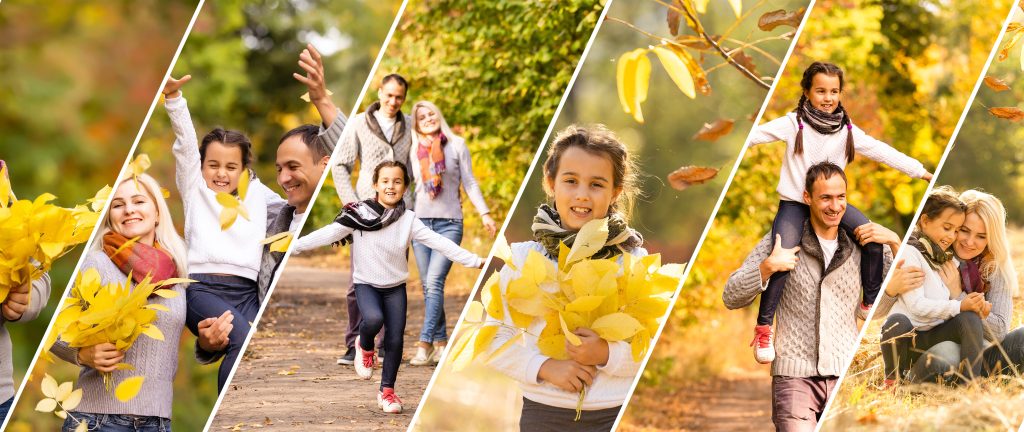
Photo collage canvases are ordered most often for birthdays, anniversaries, graduations, family trees, weddings, retirements, reunions and memorials.
What photo collage canvas is
§ 01A photo collage canvas is many photographs arranged into one composition and printed as a single canvas — not a grid of separate frames on a wall, but one piece, stretched over one timber frame, hung on one hook. You build the arrangement yourself in a free browser-based collage maker: choose a template, drop the pictures into it, set the crop inside each cell, then choose a size and how the edges are finished. We print it on cotton–polyester canvas with archival pigment ink, gallery-wrap it over kiln-dried Canadian pine and seal it under a UV-blocking satin coat.
Templates run from two photographs to a hundred and eight. Sixteen sizes, two frame depths, five edge finishes, free delivery to all ten provinces and three territories, and a lifetime warranty against fading, cracking, warping and peeling. Most orders leave the studio within one business day of you approving the layout.
Photo Collage Canvas Canada — Quick Answers
What is a photo collage canvas?
It is multiple photographs arranged into one design and printed as a single stretched canvas. Save on Canvas lets you build the layout online before ordering.
How many photos can I use?
The live collage maker includes layouts ranging from 2 photographs to a 108-photo template, with many choices in between.
What sizes are available?
The current product page lists 16 sizes, including square sizes from 8×8 to 40×40 inches and landscape sizes through 40×30 inches.
Can I order a collage canvas in Canada?
Yes. Save on Canvas offers free delivery across Canada, with orders printed and finished in Canada.
In four moves
Ten minutes, give or take- 01
Choose a layout
Pick a template family and a photograph count — anywhere from 2 to 108.
- 02
Drop the photographs in
Upload from your phone or computer, then pan and zoom inside each cell to set the crop.
- 03
Set the size and the edges
Choose one of sixteen current sizes, a ¾-inch or 1.5-inch frame depth, or canvas roll, then choose your edge finish.
- 04
Approve the proof
We send back what will actually print. Nothing goes on canvas until you say yes.
Five families, two photographs to a hundred and eight
A collage template is really just an arrangement of cells. Choose a family below and the arrangement is drawn out for you, cell by cell, at the count the template actually holds — so you can see what a hundred and eight photographs looks like before you commit to finding a hundred and eight photographs.
Any one- or two-figure number can be set. The cell count changes with the shape of the numerals.
Basic — 9 photographs, a 3 × 3 grid on a square canvas.
A plain grid, in square, landscape or portrait. The layout that disappears and lets the pictures do the work. Best for a wall where the photographs themselves are the subject.
| Family | Photographs | Shapes | Ordered for |
|---|---|---|---|
| Basic | 2–10 | Square, landscape, portrait | A first collage; a gift with a handful of good pictures in it |
| Number | 39–47 | Portrait, landscape | A milestone birthday, an anniversary, a retirement |
| Tree | 31, 50 or 108 | Portrait | A family tree; a reunion; the largest layout we print |
| Heart and Love | 3–55 | Square, landscape, portrait | Valentine’s, an engagement, a first year together |
| Kiss | 43 or 50 | Landscape | A wedding, an anniversary, a couple’s housewarming |
How big does each photograph actually end up?
This is the question nobody asks until the canvas is on the wall. Sixty photographs on a 40 × 30 cm canvas is sixty postage stamps. Set a count and a size below and the answer is drawn to true scale, against a bank card for comparison.
Each photograph prints at about 9.5 × 6.2 cm, in a 6 × 4 arrangement.
Reads from a sofa — three or four metres away, a face is still a face.
The short version: under about nine centimetres on the short side, a photograph stops being a photograph from across a room and becomes texture — which is exactly the point of a hundred-and-eight-photograph tree, and exactly the wrong outcome for eight holiday pictures.
Which photographs survive being made small
A collage is forgiving about resolution in a way a single large print is not — each cell is small, so a modest file goes further. The failure is almost never the camera. It is where the picture was downloaded from.
| Where the picture came from | Typical size | Fills a cell up to | Verdict |
|---|---|---|---|
| Modern phone, straight from the camera roll | 3000–4000 px wide | Roughly 75 cm | Ideal — use this whenever you can |
| Digital camera, JPEG or RAW | 4000–6000 px wide | Any cell we print | Ideal |
| Flatbed scan of a printed photograph at 600 dpi | ~2400 px from a 4×6″ | Roughly 60 cm | Excellent — scan at 600, not 300 |
| Photo saved from Instagram or Facebook | ~1080 px wide | Roughly 27 cm | Fine in a large collage, weak on its own |
| Screenshot of a photo on a phone | ~1170 px wide | Roughly 29 cm | Workable, but the original is always better |
| Picture pulled out of a group chat | 800–1200 px wide | Roughly 20–30 cm | Ask the sender for the original file |
| Still frame from a phone video | 1080–2160 px wide | Roughly 27–54 cm | Usable; motion blur is the real risk, not size |
| Photo emailed at “small” or “medium” size | 600–800 px wide | Roughly 15–20 cm | Only in a large-count layout |
The rule behind the table
We work to roughly 100 pixels per inch of finished print — about 40 pixels per centimetre. Divide the pixel width of your file by 40 and you have the widest cell, in centimetres, that it fills cleanly. A 1080 px Instagram save divided by 40 is 27 cm.
What we do before printing
Every file gets colour, contrast and sharpening set for canvas, which absorbs a little more ink and reads slightly softer than paper. If one photograph in your layout is too small for the cell it sits in, we tell you which one and where it is — before anything is printed, not after.
Mixed sources are normal
Most collages we print span thirty years: scans of prints, early digital snaps at 800 px, and last summer at 4000. That mixture is fine. We place the weakest files in the smaller cells where the difference cannot be seen.
What happens where the canvas turns the corner
A gallery wrap has about two centimetres of canvas that is not on the front face. On a single photograph that band barely matters. On a collage it decides whether a photograph in the outer row survives intact. Five finishes, drawn from the side of the frame inward.
Folded
The image continues around the side of the frame.
The collage carries on over the wrap, so the canvas reads as one continuous object from every angle. The catch on a collage specifically: whatever sits in the outer band gets folded around the corner, which can cut a face in half. Choose it when the outer cells are backgrounds, not people.
Mirrored
The outer band is reflected outward.
The edge band is a mirror image of the outermost strip of the picture, so the sides are filled and nothing from the composition is lost around the corner. On collages this is what we recommend most often — it keeps every photograph whole on the front face.
Stretched
The outer pixels are pulled around the wrap.
The outermost row of pixels is stretched over the sides, producing a soft streak of colour. Nothing is lost and nothing is duplicated. It suits collages with dark or busy outer cells, where a mirrored band would read as an obvious repeat.
White
A clean white border on all four sides.
The front face holds the whole collage and the sides are solid white. The most gallery-like of the five, and the safest when the layout runs right to the edge. It suits pale walls and Basic grid layouts.
Black
A solid black border on all four sides.
The same idea in reverse: the sides are solid black, which draws a hard line around the composition and makes the photographs sit forward. Good for dense, high-count layouts and for a dark or wood-panelled wall.
Our default for collages: mirrored, white or black. A folded edge is the right choice on a single photograph and the wrong one on a dense grid — ask for it only when you have checked what sits in the outer cells.
Two depths, drawn to scale
Both are kiln-dried white pine from FSC-approved forests, finger-spliced so the bar cannot twist as a Canadian winter dries the air out of a room. On a collage the depth matters more than usual: a large, high-count layout needs the shadow line to stop it reading as wallpaper.
¾″ — 2 cm
Sits close to the wall and stays light. The right choice for Basic layouts up to about 40 × 60 cm, and for a wall where several canvases hang together as a group.
1½″ — 4 cm
The gallery depth. The canvas stands off the wall and throws a shadow line. For a Tree or Number layout at 75 cm and up, this is what stops a hundred small photographs flattening into pattern.

Photo collage canvas, specified
| Photographs per canvas | 2 to 108, set by the layout template you choose |
|---|---|
| Layout families | Basic, Number, Tree, Heart and Love, Kiss |
| Layout tool | Free, runs in any browser, nothing to install. You pay only for the printed canvas |
| Source files | Phone photos, camera files, scans of prints, stills from video. Mixed sources are normal |
| Recommended resolution | About 100 pixels per inch of finished cell — divide pixel width by 40 for the widest cell in centimetres |
| Cropping | Pan and zoom inside each cell. Nothing is cropped without you seeing it first |
| Proof | Emailed before printing. Nothing goes on canvas until you approve it |
| Canvas | Museum-grade cotton–polyester blend, acid-free |
| Ink | Archival pigment, solvent-free — no odour in the room |
| Printers | HP-certified, HP inks |
| Finish | UV-blocking protective satin coat on every print |
| Frame | Kiln-dried white pine, FSC-approved forests, finger-spliced. ¾″ (2 cm) or 1½″ (4 cm) |
| Edges | Folded, mirrored, stretched, or solid white or black |
| Sizes | current list. 16 current canvas sizes: 8×8, 10×10, 12×12, 16×16, 20×20, 24×24, 30×30, 36×36, 40×40, 12×9, 16×12, 20×15, 24×18, 30×22, 36×27 and 40×30 inches |
| Shapes | Square, portrait, landscape |
| Options | Black & white conversion, added text, easel back, premium and floating frames |
| Production | Ships within one business day of proof approval |
| Delivery | Free to every Canadian address — ten provinces, three territories |
| Warranty | Lifetime, against fading, cracking, warping and peeling |
| Made in | Canada. Priced in Canadian dollars, no duty or brokerage |

What you can expect from a photo collage canvas
We are not publishing unverified testimonials or a made-up star rating. Instead, the page explains the production and ordering experience you can verify before you buy.
Build the collage online, choose the crop for every photograph, and review the finished arrangement before ordering.
Choose from sixteen current canvas sizes, plus ¾-inch, 1.5-inch and canvas-roll frame options on the product page.
Your collage is printed, stretched and finished in Canada, with free delivery across Canada and a lifetime warranty.
What people ask before they order one
How many photos can I put on one collage canvas?
Our collage builder ships layout templates that hold anywhere from 2 photographs up to 108. The Basic family covers 2–10 photos, the Number family draws a figure out of 39–47 photos, the Heart and Love family runs 3–55, and the Tree family goes to 108. In practice most people are happiest between 9 and 30. Past that each photograph gets small enough that faces stop reading from across a room — the § 03 calculator on this page shows you exactly how big each photo ends up before you order.
What size photo collage canvas should I order for 20 photographs?
For roughly 20 photographs we would put you at 60×40 cm or larger. That gives each photograph about 12×8 cm of printed area — big enough that a face taken at arm’s length still reads from a sofa. On a 40×30 cm canvas the same 20 photographs land at roughly 8×5 cm each, which works for a desk or a hallway you walk past closely, but not for a feature wall.
Do all the photographs have to be the same shape?
No. You can mix portrait, landscape and square photographs freely. Each cell in the layout has its own shape, and when a photograph does not match its cell the builder lets you pan and zoom inside the cell so you choose what is kept and what is cropped away. Nothing is cropped automatically without you seeing it first.
Can I use photographs from my phone, from Instagram, or scans of old prints?
Phone photographs and scans are fine — they are most of what we print. Images saved from Instagram, Facebook or a screenshot are the risky ones, because those platforms re-compress the file and what you download is often only about 1080 pixels wide. That is enough for a small cell in a large collage and not enough for a large one. Wherever you can, send the original file from the camera roll rather than a copy pulled back down from a social account.
Is the collage maker free, and do I need an account to use it?
The builder is free and it runs in your browser — there is nothing to install and no charge to lay a collage out, rearrange it or start again. You pay only when you order the printed canvas. You can build and preview a layout before creating an account; an account is only needed at checkout so that we can keep your order and your files together.
What happens at the edges of a photo collage canvas?
You choose. A folded edge continues the collage around the side of the frame, a mirrored edge reflects the outer band of the image so nothing is lost, a stretched edge smears the outer pixels around the wrap, and a plain white or black edge leaves a clean border. For collages we usually recommend white, black or mirrored: a folded edge can cut a photograph in half at the corner where the canvas turns.
How long does a photo collage canvas take to arrive in Canada?
Most collage orders leave the studio within one business day of you approving the layout. Delivery is free everywhere in Canada. Typical transit after that is verified — confirm your own courier windows for Ontario and Quebec, the Prairies and British Columbia, and the territories, where transit is longer.
Can I add names, dates or a message to the collage?
Yes. Several of the layout families are built around type — the Number family arranges photographs into a figure for a birthday or an anniversary, and the Love and Kiss families arrange them into words and shapes. You can also leave a cell empty and ask us to set a name, a date or a short line of text in it. Put the wording in the order notes and we will send a proof before anything is printed.
The pictures are already on your phone. They are just not on a wall.
Open the layout maker, choose a family, drop the photographs in. It is free to build, you approve a proof before anything prints, and it ships free — usually the next day.
Occasional notes on new stock, sizes and subscriber-only pricing. No more than monthly.
Unsubscribe any time. Privacy policy.